Health & wellbeing
Learning to be calm is a skill. We teach it.
Rest isn’t only sleep
Small children are processing more in a day than they will at almost any other point in their lives. Everything is new, and all of it has to be filed. That’s why they sleep so much. But it’s also why sleep alone isn’t enough.
A child who has been outside all morning, or who has just fallen out with a friend, or who is simply overloaded, needs a pause. Not a nap. A few minutes of something quiet and familiar, so their body can settle and they can go again.
So we build rest into the whole day, not just the middle of it. We call it Restful Rituals, and it’s one of the few things we do exactly the same way in every room, in every one of our nurseries.
What a ritual actually is
The same sequence, in the same order, every single day.
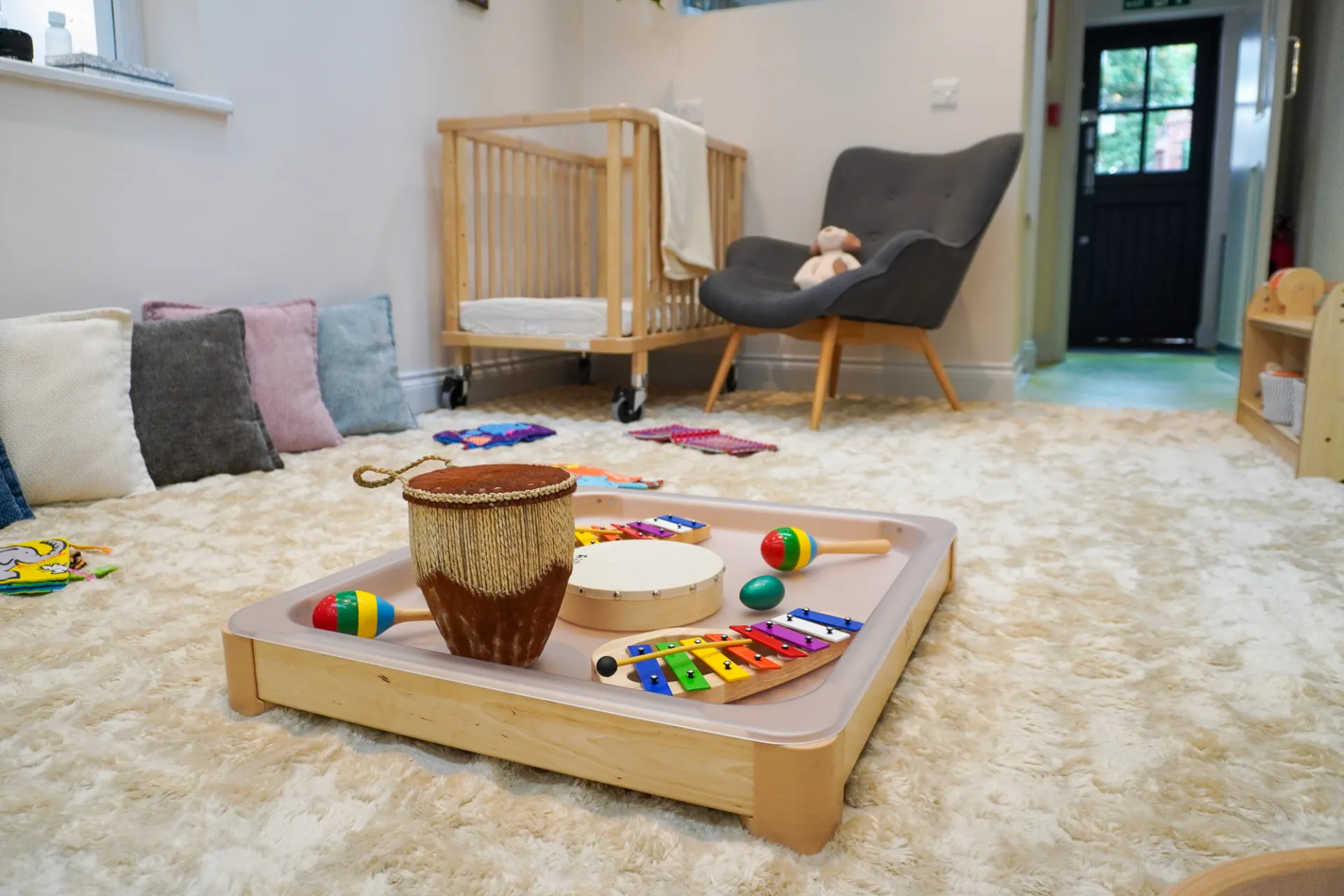
The lights come down. Voices drop. A signal sounds: a chime in the baby and toddler rooms, an ocean drum with the older children. Always the same one, in the same place in the sequence. A soundscape plays, the same one every day. And then someone sits with your child.
None of it is complicated, and that’s the point. Small children can’t tell the time, so they read the day instead, and they learn a sequence long before they can explain it. Their body knows what’s coming.
Because it never changes, it works anywhere in the room, on a difficult day, with a practitioner they know less well, in a different one of our nurseries.
My Magic Breath
It’s a song we sing every day, with actions. It teaches three affirmations: I’m brave, I’m strong, I’m kind. Between the verses there’s humming, which is where the actual breathing happens. Slow in through the nose, out through the mouth, over and over, without anyone having to explain what breathwork is.
And a butterfly hug: arms crossed over the chest, tapping each shoulder in turn. It sounds like nothing. It’s a real technique, and children use it on themselves for years.
The point is what it becomes. Months later, when a child is upset, a practitioner can say “shall we do a few magic breaths?”, and the child already knows how. Eventually they do it without being asked.
That’s the whole ambition of Restful Rituals in one song: a child who starts by needing an adult to help them settle, and finishes with something they can do themselves.
Mini Rest and Reset
Through the day, whenever a child needs it, there’s a short ritual for the situation. They have names because children remember names.
Hums and Hugs
for sadness, or a bump, or the end of a hard separation. A hug, and humming, until it passes.
Ocean Pause
for frustration or overwhelm. An ocean drum, played softly, and breathing together until things slow down.
Sound Surfers
for a group that’s gone wild, usually on a wet afternoon. Children balance like surfers while the waves play, then flow like water when they stop.
Scented Dancing
for moving from something busy to something calm. Scarves and slow music, and by the end everybody is sitting down.
Resting Nest
children choose a toy that needs a rest, tuck it up, then rest alongside it. “You are resting and recharging,” they tell it. Then, “I am resting and recharging.”
Calm and Gentle Breathwork
lying down, listening, three deep breaths, sometimes with a small toy on the tummy to watch it rise and fall.
None of these are used to distract a child out of a feeling. They sit alongside it. We name what’s happening, we say it’s allowed and we stay until it passes.
Food at Katey’s House
Our menus are developed with Laura Matthews, a Registered Nutritionist who specialises in early years food. They follow the Department for Education’s Nutrition guidance for early years providers. They also meet the Early Years Foundation Stage requirement that every meal, snack and drink is healthy, balanced and nutritious.
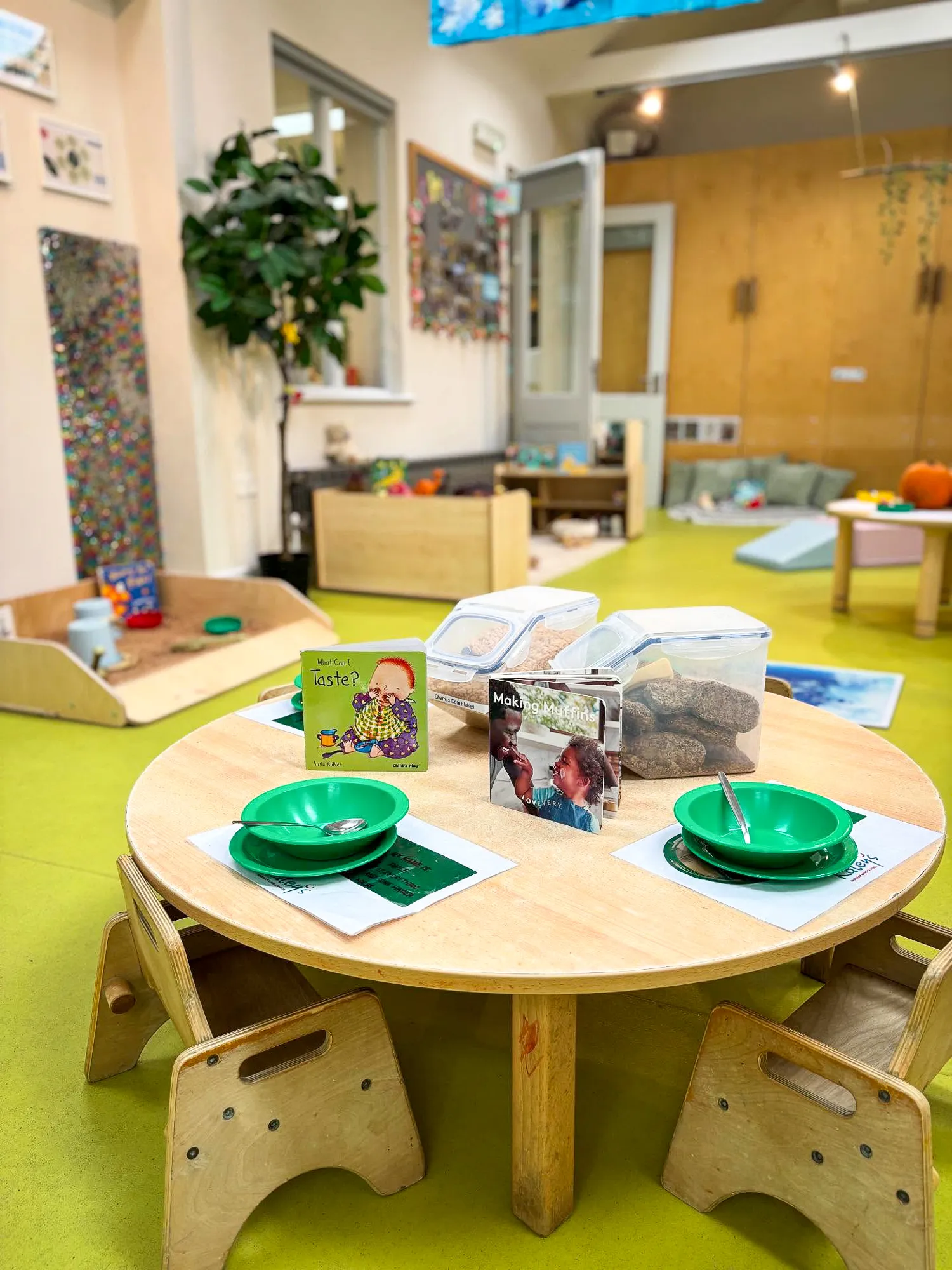
That means a varied, balanced menu across the week, portion sizes suited to each age and stage, and allergies and dietary needs planned in from the start. Mealtimes are part of learning too. Children sit together, serve themselves and try new tastes with early educators alongside them.
About Laura Matthews
Laura Matthews is a Registered Nutritionist (RNutr) and early years nutrition specialist. She spent ten years as Head of Nutrition at Jamie Oliver, and now works with nurseries and schools across the country to raise the standard of children’s food. She helps settings put the Department for Education’s early years nutrition guidance into practice.
Ready for the unexpected
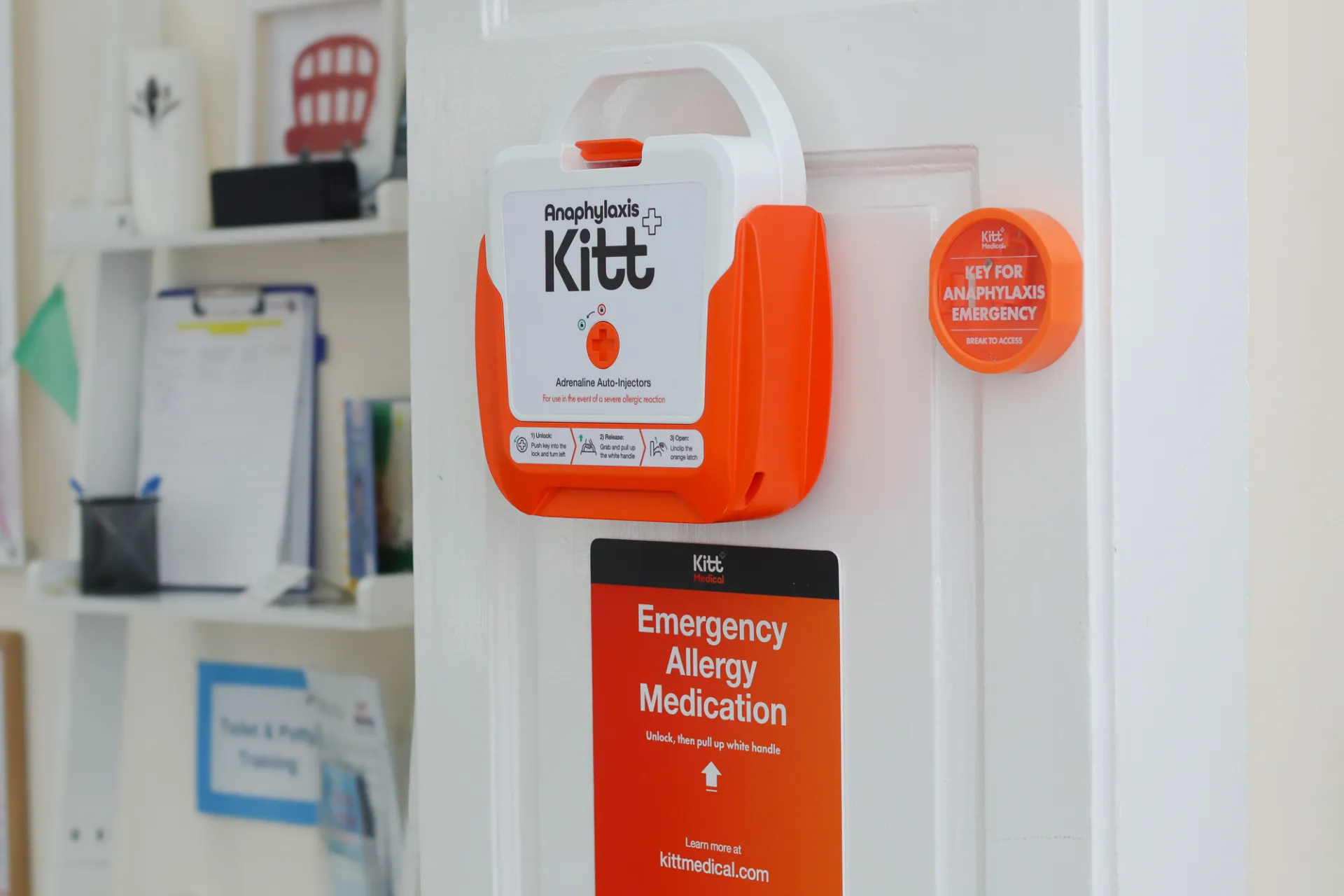
Every Katey’s House nursery has an Anaphylaxis Kitt from Kitt Medical: emergency adrenaline auto-injectors, kept securely and ready to use if a child has a serious allergic reaction. It sits alongside the plan we make with you for any child with a known allergy, and it means we’re prepared even if a reaction is the first sign of one.
All our early educators are trained to use the Kitt and in first aid. The pens are replaced before they expire, so they’re always ready.
If your child has a diagnosed allergy, we’ll still ask you to provide their own prescribed medication and agree their care plan with you. Tell us about any allergies on your child’s My World form and we’ll plan around them from day one.
Come and see
Come at a busy time and watch how the adults are with the children who aren’t yours, especially with a child who’s upset.